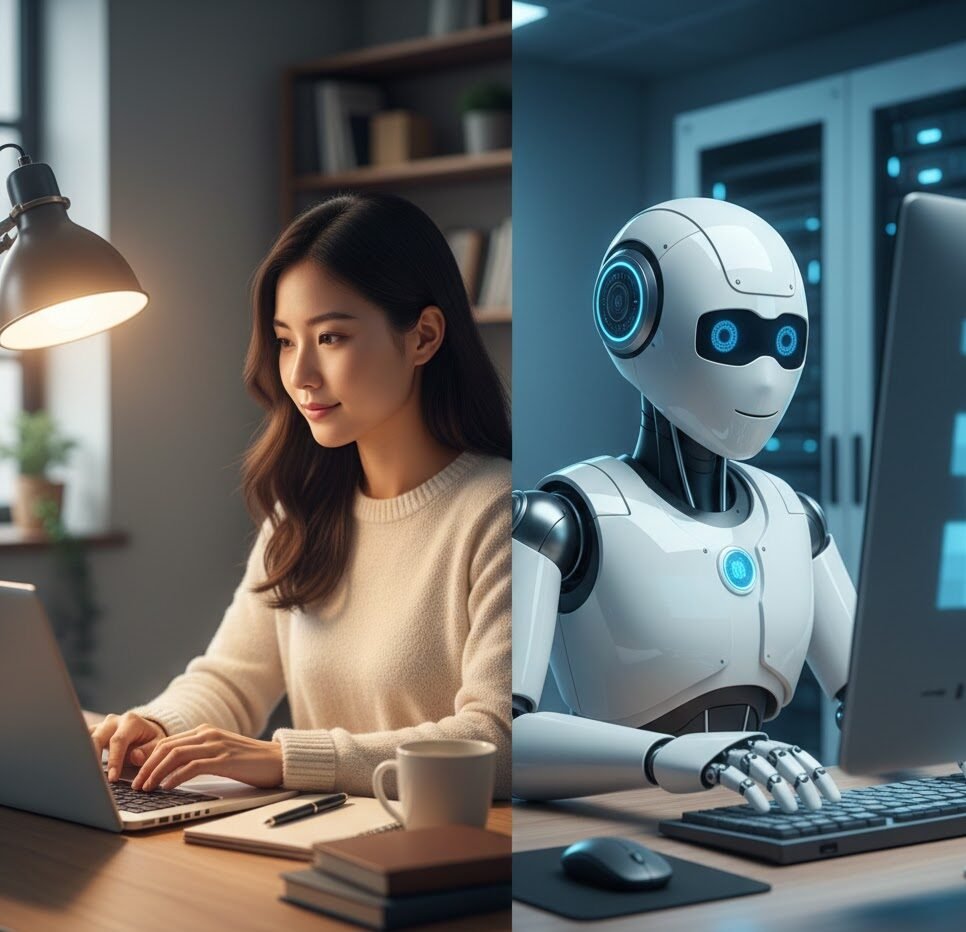
AI tools have made writing faster than ever. You can generate a blog, an assignment draft, a business email, or even a full website page in minutes. And at first glance, it often looks fine. The sentences are readable, the structure seems okay, and the flow feels smooth.
But once you read it like a real human reader or a real evaluator, problems start showing up. The tone feels slightly off, important details are unclear, wording sounds repetitive, and some lines just don’t feel natural. That’s exactly why AI-written content still needs professional proofreading and editing, especially when your grades, credibility, clients, or brand reputation are on the line.
AI writing is fluent but not always accurate
AI is good at producing fluent sentences, but fluency is not the same as correctness. Many AI outputs contain subtle mistakes that don’t look “wrong” until you examine meaning. For example, a sentence might sound confident but it may be factually incorrect, logically weak, or misleading.
Professional editing focuses on meaning, not just grammar. An editor checks whether the content truly says what you intend, whether your argument makes sense, and whether the claims match the context.
AI often creates unnatural or generic tone
One big giveaway of AI-written content is how it can sound polished but empty. It uses common phrases, predictable transitions, and safe language that doesn’t feel personal or convincing. For academic writing, this can reduce clarity and impact. For marketing content, it can reduce trust and conversions.
A professional editor helps your content sound human. They improve tone, remove robotic phrasing, and shape your writing so it feels authentic, confident, and audience-friendly.
AI misses context and audience expectations
AI can’t fully understand why you’re writing or who you’re writing for. A university assignment needs formal academic tone, proper structure, and strong reasoning. A business proposal needs clarity, persuasion, and professionalism. A website needs scannable copy that aligns with your brand voice.
Professional editors adjust content for your exact purpose and audience. They make sure the writing matches the expectations of the reader, whether that reader is a professor, client, manager, or customer.
AI makes logic and flow issues easy to miss
AI text can look organized because it follows templates, but it often lacks real logical development. You may find paragraphs that repeat the same point in different words, conclusions that don’t match the introduction, or ideas that jump without smooth transitions.
Editing improves the structure. It strengthens your argument, improves flow, removes repetition, and makes sure every paragraph adds value.
AI can introduce hidden grammar and punctuation errors
Even though AI writing is usually grammatically correct, it still makes mistakes. Common issues include incorrect tense consistency, awkward sentence construction, comma splices, wrong prepositions, and inconsistent capitalization.
Proofreading focuses on these smaller errors that can make your work look unprofessional. For academic submissions, these “small” errors can lower grades. For business documents, they can reduce trust.
AI struggles with citations, formatting, and academic standards
If your content includes references, citations, or formatting rules, AI is not reliable. It may invent sources, format citations incorrectly, or mix styles. It may also mishandle headings, bullet styles, spacing, and the overall academic layout.
Professional editors ensure your document follows the required format, looks clean, and meets submission standards. This is especially important for research writing, dissertations, and formal reports.
AI-written content can trigger quality concerns or detection issues
Even when AI content is not “wrong,” it can still appear suspicious because it feels too generic, too balanced, or too perfect in the same pattern. Many institutions and clients are also more careful now. They want original work that reflects real understanding and real effort.
Human editing helps by making the writing more natural, more specific, and more aligned with your unique voice. It also improves originality in expression, which reduces the risk of the content looking machine-generated.
What professional proofreading and editing actually changes
Professional proofreading and editing typically improves your content in these areas
Clarity so every sentence is easy to understand
Tone so it matches academic or professional expectations
Flow so ideas connect smoothly and logically
Accuracy so meaning is correct and consistent
Grammar and punctuation so writing looks polished
Consistency in spelling, terminology, and formatting
Readability so your content feels human and confident
If your document matters, these improvements matter too.
When you should definitely get AI-written content edited
You should always consider professional editing if you are working on
Academic assignments, essays, research papers, and dissertations
Scholarship statements, SOPs, and university documents
Business proposals, reports, and presentations
Website content, service pages, and marketing copy
CVs, cover letters, and professional profiles
Basically, if you would feel stressed submitting it as-is, it’s a sign you should get it reviewed.
A smarter approach is AI plus human expertise
AI can be a great starting point. It helps you brainstorm, outline, and draft quickly. But the best results usually come from combining that speed with human expertise.
Use AI for the first draft, then use professional editing to make it accurate, natural, and publication-ready. This hybrid approach saves time while protecting quality.
If you want reliable academic support and professionally reviewed writing, you can also explore services at https://kmassignmentservices.com/ where students get guidance for academic content, formatting, and quality improvement.
Final thoughts
AI can write fast, but professional writing is about trust, clarity, and credibility. Proofreading and editing are what turn an AI draft into something that feels genuinely human, reads smoothly, and meets real-world standards.