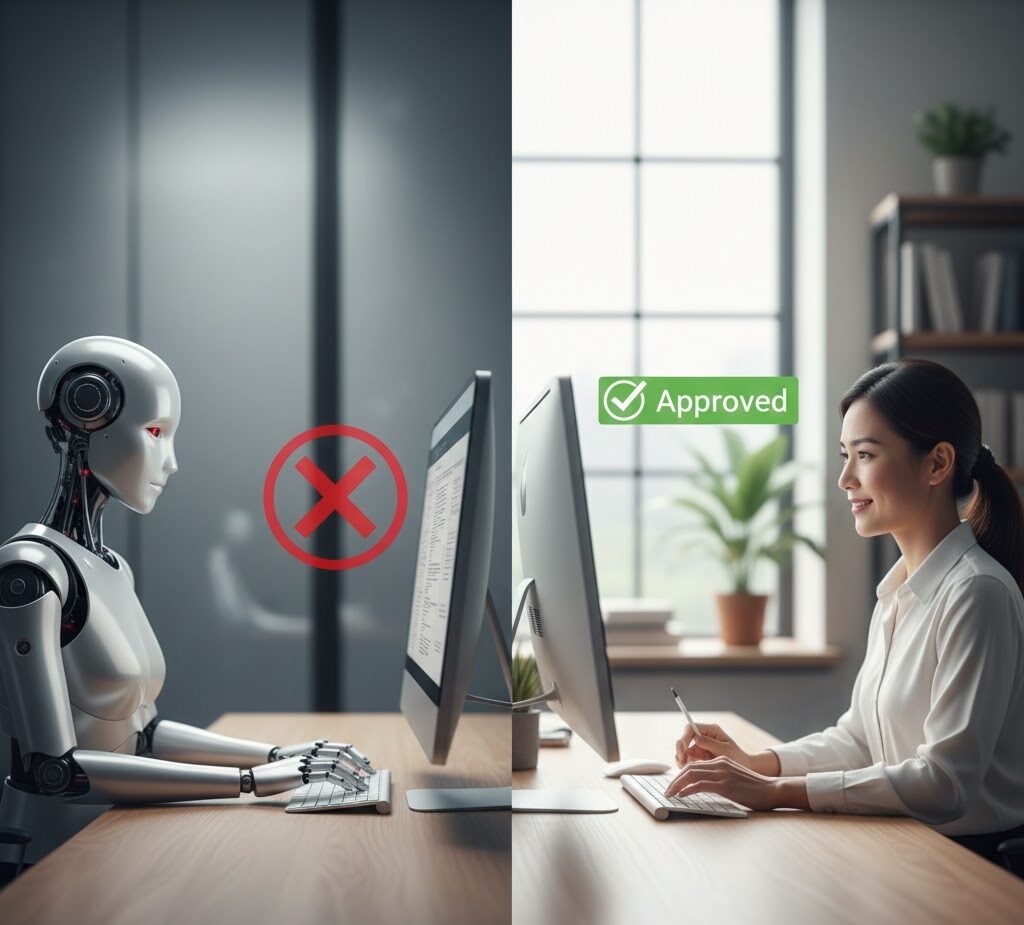
AI translation has become incredibly common. It’s fast, usually free, and it feels “good enough” for everyday tasks like translating a message, a casual email, or a short social media caption. But when the document is academic or legal, “good enough” can turn into a serious problem.
Academic writing depends on precision, and legal writing depends on precision plus legal meaning. A single mistranslated term can change the outcome of a research paper, delay an admission process, weaken a grant application, or even create contractual risk. That’s why AI translation often fails in these areas, and why professional, human translation is still the safest option.
What AI Translation Is Actually Good At
AI translation works best when the text is simple, repetitive, and context is not critical. For example, a basic product description, a short internal note, or general information that doesn’t require formal tone or technical accuracy. It can help you understand the idea of a text, but it should not be treated as a final, submission-ready translation for academic or legal use.
Where AI Translation Fails in Academic Documents
Academic documents are not just words. They are structured arguments, with specific terminology, formal tone, citation rules, and discipline-specific language. AI translation typically struggles with these areas.
It loses technical meaning and discipline-specific terms
In research writing, the same word can mean different things in different fields. AI may translate terms literally without understanding the discipline. The result is a translation that sounds readable but becomes academically incorrect.
It breaks the academic tone
Academic writing has a formal, consistent tone. AI often produces wording that sounds casual, inconsistent, or oddly mechanical. Even if the grammar looks correct, the writing may not match academic standards required by universities, journals, and conferences.
It misinterprets complex sentences
Academic sentences are often long and layered, with careful logic. AI translation can flip relationships between ideas, weaken causation, or incorrectly handle qualifiers like may, suggests, significantly, or not necessarily. These small shifts can change the meaning of results and conclusions.
It struggles with citations, references, and formatting
AI tools often ruin formatting, change citation styles, break headings, or mishandle tables and figure labels. Academic documents require clean structure, and messy formatting can create a poor impression even if the translation is acceptable.
It creates false confidence
The biggest issue is that AI outputs often look fluent. That fluency makes people assume the translation is accurate. In reality, it may contain hidden errors that only appear when someone checks technical meaning line by line.
Where AI Translation Fails in Legal Documents
Legal documents are built on definitions, obligations, rights, and enforceability. Legal translation is not language conversion. It’s transferring legal meaning between languages and legal systems, and AI is not reliable for that.
It mistranslates legal terms and phrases
Legal language uses terms that are very specific. Words like shall, may, hereby, indemnify, liability, warranty, governing law, and jurisdiction cannot be translated casually. AI may choose a synonym that sounds fine but is legally wrong or weaker.
It changes obligations and intent
A small wording change can change whether something is mandatory or optional. AI sometimes softens or strengthens clauses unintentionally. That can alter responsibilities, deadlines, penalties, and rights.
It fails with legal structure and consistency
Legal documents depend on consistent terminology across the entire document. If a key term is translated differently in different sections, it creates ambiguity. AI tools often vary word choices, which is risky in legal contexts.
It can mishandle numbers, dates, and proper nouns
Even a minor mistake in figures, dates, address details, names, or references can cause disputes or rejections. This is more common than people think, especially when the document contains mixed formatting and legal references.
It raises confidentiality and compliance concerns
Many legal documents contain sensitive information. Copying them into online tools can create privacy and compliance risks depending on the tool, the settings, and the jurisdiction.
What to Use Instead of AI Translation
If the document is for university submission, publication, immigration, court, contracts, compliance, or any official use, the best alternative is human translation supported by professional workflow.
Professional human translation with subject expertise
Choose a translator who understands the subject area. Academic writing needs a translator who can handle research language. Legal documents require legal translation knowledge, not general bilingual ability.
Translation plus editing and proofreading
A reliable workflow includes at least two stages: translation, then editing and proofreading for accuracy, tone, and formatting. This catches hidden meaning errors and ensures the final document reads naturally.
Terminology management and consistency checks
Professionals build a glossary of key terms, especially for repeated technical or legal phrases. This ensures consistency across the whole document, which is essential for legal clarity and academic credibility.
Certified translation when required
Some universities, embassies, and legal processes require certified or sworn translation. In those cases, AI translation is not acceptable at all.
A smart hybrid approach if you’re on a tight timeline
If you are in a hurry, you can use AI as a rough draft only, then hire a professional translator to correct meaning, tone, and structure. This approach can reduce time, but it still requires expert review before you submit anything.
How to Know If Your Document Needs a Human Translator
You should avoid AI translation and use a professional when any of these apply:
the document will be submitted to a university, journal, court, embassy, or employer
the text includes technical terminology, legal clauses, or research methods
accuracy matters more than speed
your reputation, grade, funding, or legal safety depends on the wording
the document contains confidential or sensitive information.
Final Thoughts
AI translation is useful for quick understanding, but it is not a safe solution for academic and legal documents. These documents require precision, consistency, correct tone, and real subject understanding. In 2026, the best choice is still human translation supported by professional editing and proofreading.
If you want academic support professionally, you can also explore academic support services at KM Assignment Services for reliable guidance and assistance.